Nonfiction from Lily Damron
Great Thing Dying, Living On
Acer saccharinum has several names. Its epithet, saccharinum, refers to the tree’s sweet sap that can be turned into syrup. It’s also silver maple or silverleaf, since the pale green undersides of its foliage seem to shimmer silver in the sun. Or river maple, for its preferred habitat, or softwood because its lumber is brittle. Silver maples are prodigious growers, gaining up to three feet per year. They grow tall and broad until their weak branches can’t hold the weight anymore, and then they die.
—§—
Two hundred and eleven years ago, a samara spiraled through muggy air to marshy ground and took root on the floodplain of a small river. It joined thousands of other winged seeds that whorled with their paper helicopter blades and came to rest in the undergrowth of untouched forest. The miry river had been called ‘Blue Water Creek’ by a few explorers who came and went, and the ground the new maple took root in was legally a frontier called the Louisiana Territory. The tree grew regardless.
A thousand miles away, the eighteen United States declared war on Britain in their second war for independence. The seedling pushed its way through brush at a tremendous two feet per year, outstripping neighboring trees in their race toward the sun. Its smooth sapling bark grew rough, and it began producing seeds. All while colonial wars for independence were fought and Napoleon was defeated. It reached thirty, forty feet as settlers on the Oregon, Santa Fe, and California trails crossed the newly named Blue River up and downstream from where it was rooted. Beethoven died, aluminum was isolated, and the internal combustion engine was invented.
The tree grew wider, established three main shoots from its squat trunk. There were more revolutions, civil wars, famines, inquisitions, depressions, and literary movements while its bi-colored leaves turned red and brown and fell in the thousands to the ground. Other trees grew and died, adding their mass to the riverbed while the banks eroded and shifted. Squirrels, ducks, and eagles nested in its branches while deer laid nearby, blips in the shadow of its memory.
By 1912 the cardboard box, the radio, the automobile, and aspirin had been invented. The Eiffel Tower was built, and the last Emperor of China assumed the throne. As the Titanic sank, the maple’s great boughs were thick as full-grown trees, clothed with twining bark, and the massive trunk was nine feet around.
—§—
Acer saccharinum, as a species, became popular in new towns and on the frontier as the United States spread west. Its popularity continued through the mid twentieth century, as its hardiness and growth rate made it an ideal shade solution. Today, Acer saccharinum is one of the most common trees in the eastern United States, yet many advise against its planting. It has gained infamy for growing larger than anticipated and, in its old age, dropping limbs on houses. Its many, abnormally large samaras also clog gutters and its shallow root system can disturb gas lines and sidewalks.
—§—
In the following years, another centenarian tree grew just ten feet away, listing at a forty-five-degree angle to get sun from beneath the tree’s bulk. The area around the two trees became farmland, then a rural town, and finally was developed as suburbs—as world wars and economic depressions came and went. The population of the world reached two billion, the first commercial flight took off, and the first Superman comic was published. By the middle of the twentieth century, sounds of cars and train whistles could be heard near where the trees stood. It stood while historic floods swept over, putting fields and houses underwater, floating grown trees downriver.
The maple’s topmost branches hung over a hundred feet over the water below. The soft river-ground around it began to sink under its weight. It passed its species life expectancy by twenty years.
As the Cold War escalated and the mobile phone was invented, the tree had its first encounters with modern America and came to sit on the property of a house, where the owners cut away the underbrush to find it and its neighbor. The Berlin Wall fell, the USSR dissolved, and Information Age began.
For the first time, someone could properly marvel at the tree’s girth and height, and it was crowned ‘King Tree.’ Children piled logs against its side, tied a climbing rope to a branch, and pulled themselves to the first split in the trunk—seven feet above the ground. Two could sit ensconced in the hollow of the split, another could perch between two boughs. They craned their necks against the rough, wall-like expanse of its heavy boughs to watch the branches of the crown move in the wind. The rope frayed and fell and the children grew. Their whole lifespan, ten or fifteen years against two centuries. The tree had been old when they found it and was just as old when they left.
The Twin Towers fell, and the tree’s neighbor splintered and died and dropped its limbs into the river, leaving nothing but its slanted, limbless trunk. The tree itself lost a fifteen-foot-long limb in the rainy season, which fell so it speared the malleable ground as a bare obelisk, a stillborn sapling of its own. The owners of the property used it for firewood.
Eight more years passed, with heavy floods and frigid winters. The bank eroded so the tree was a mere five feet from the edge. With each winter more branches broke, their brittle wood too weak to hold their icy weight. As Apple was founded, social media was born, and the global financial crisis hit, the tree’s trunk attained a striking eighteen feet around. Up to the fork it was wide as it was tall, so surrounded by vastly slimmer walnuts whose own forks disappeared into the canopy, the maple looked like a primeval relic. Within a hole in the largest bough, two vultures raised a clutch.
—§—
Acer saccharinum has no defenses against rot once it loses a major limb. Even though it is highly resistant to disease and insect damage, reproduces quickly, and grows fast; once it gets big enough, it cracks under its own weight and rots. Tree-care experts recommend careful pruning to avoid these problems.
—§—
The tree was now eighty-three years past its species lifespan.
The branch the vultures roosted in, large as the dead partner’s mushroom-laden trunk, broke above the vultures’ hole and fell half into the riverbank. It tilted up so a person, or bird, could climb atop it and see the babies inside grow and lose their downy white feathers. They raised their fledgling wings at whoever came within eyesight, hissing like death. Months later, as the world shut down in a pandemic, racial protests broke out, and historic wildfires filled skies around the world with smoke, they climbed atop the jagged edge of the branch vestige to practice flapping their dark wings and flew away.
The bough the vultures made their home had been half as wide as the tree itself and was directly attached to the trunk, so now an obvious stub jutted out under the canopy. The lack of cover revealed half a dozen smaller pieces like it.
One cloudy morning in the tree’s two-hundred-and-eighth year, while the air tasted like storms and mildew, a person turned to consider it. She imagined being very large and ancient, so a person might seem like a squirrel, stopping to size her up before darting away to find nuts.
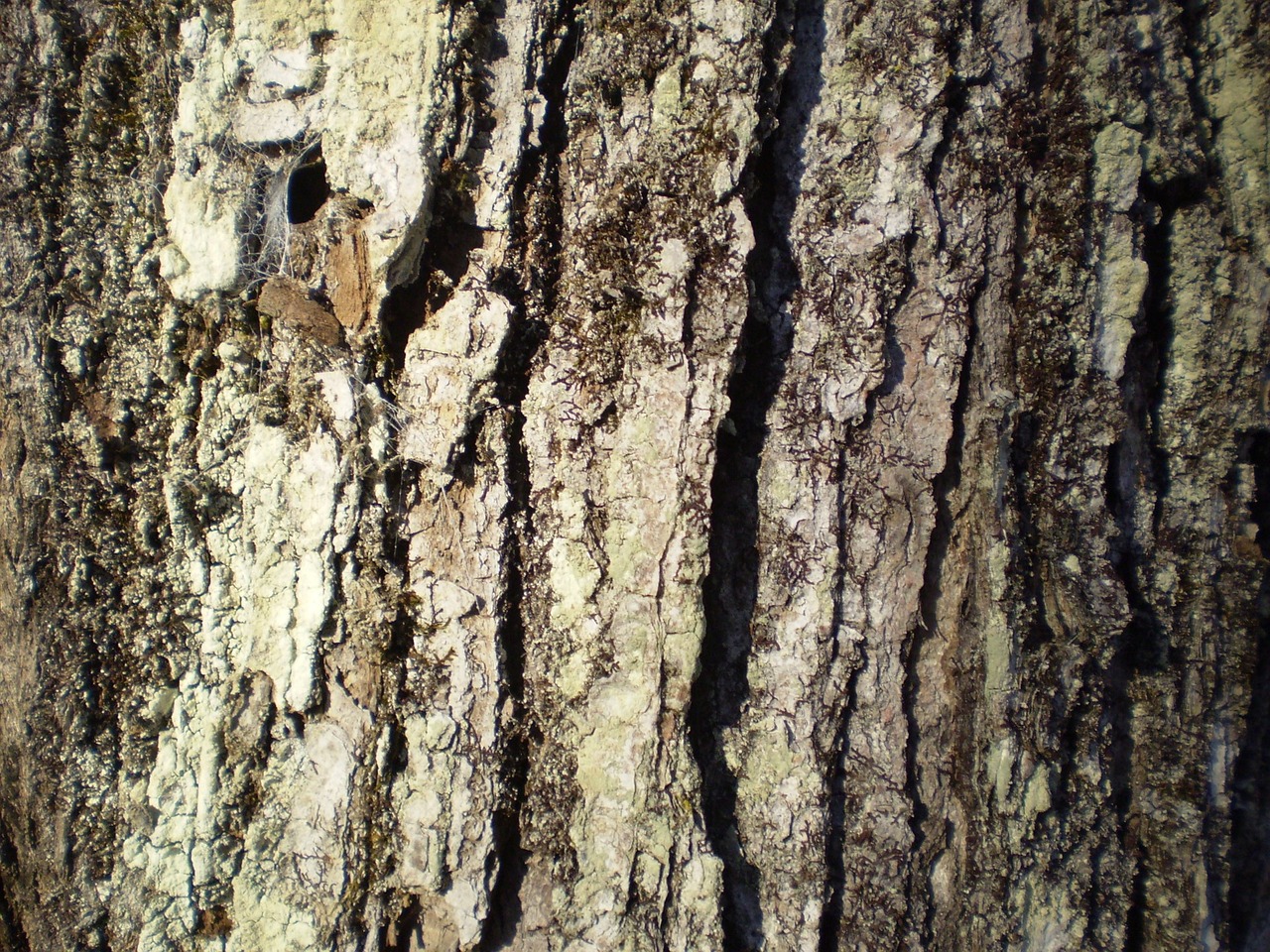
Against the sound of the brown and bloated river, she considered the bared heartwood of the branches and the naked twigs. She felt the tree’s hoary bark as she measured a length of twine around its trunk, listened to tailwinds in its winking silver leaves, smelled perfumed rain dripping off it.
She was in the presence of a great thing dying.
The person thought about herself in comparison to the tree, how small ants seemed to human eyes. She thought about how New York was twenty-three times older than her, and how Rome was seven times older than New York, and how billion-year-old stars just exhale off their atmospheres and shrivel.
The tree budded in the spring, as it had for the rest of its two-hundred-year life. Its lopsided bulk shaded wildflowers on the riverbank with the silhouette of a broken crown.
.
.
Lily Damron is a writer from Kansas.
 atlasandalice.com
Leave a comment