Fiction from Elliott Gish
Nestling
They called a curfew in Laherty after Rufus Orville got snatched. By 6 PM, all the kids in the neighborhood had to be inside. That damn near killed us, since it was summer. We’d watch the blazing sun from the shadows of our bedrooms, thinking of all the fun we could be having out in it, and stew.
No one had seen it happen, exactly. Janine Pritchard remembered a black car coming slowly down the road, almost idling in its languor. Henry Keener said he heard a whistling noise, low and soft, like someone calling to a wary dog. May Anne Hornaday told us all that she’d seen Rufus that day, walking down the sidewalk with a piece of chalk in his hand, his wide eyes narrowed as though staring into the distance at someone he could not quite place. When we questioned her about the chalk, she said that he had been drawing a hopscotch grid on the ground and jumping it by himself, one forlorn square at a time.
May Anne was a liar by habit, but her story had the ring of truth—Rufus was exactly the kind of boy who would draw a hopscotch grid just to play by himself. And sure enough, when we walked by the Orville house, there were traces of blue chalk still on the sidewalk, not quite washed away from the rain that fell the night Rufus was taken.
The Orvilles were a wreck. Mrs. Orville couldn’t stop crying. Mr. Orville couldn’t stop drinking. Gregory, the older son, walked around with big empty zeros for eyes, looking past us when we passed on the street.
They thought he was dead. We all did. What else was there to think as the days went by?
Kids being kids, that didn’t stop us from resenting Rufus. He’d ruined our summer, taken away the freedom that started at sunrise and only disappeared when the streetlights came on, all because he’d been dumb enough to get himself snatched. That was how we thought of it: that it was something he had done, somehow, to himself, something for which he was to blame. None of us would ever get taken by some stranger on the street. We were too quick, too canny, too sharp. Rufus disappeared, we all concurred, because he was soft and pliant, easy to fool, easy to scare. Kids like him were mice to the cats that prowled the streets, the ones we learned about in stilted, solemn assemblies about stranger danger. The world was full of horrors, and if you could not dodge them, you were dead. Rufus’s disappearance was, by our own sideways logic, his own fault.
Which was all well and good until he came back.
—§—
He came back on a Wednesday morning, when most of us were still asleep. Old Mrs. Eaton, a habitual early riser who lived at the far edge of town, was on her porch with her first cigarette of the day and saw him emerge from the woods, his clothes splattered with mud, leaves stuck in his curly hair. It took her a moment to recognize him, and by the time she squared up the face of the wild child emerging from the woods with the one she’d seen on posters, he was well down the road, walking in the direction of his house. She called after him, and then, when he did not stop or turn around, called the police.
“His eyes,” Mrs. Eaton said later, shaking her head. Her hands were shaking, too. “That boy’s eyes were empty. Like something’d reached inside him and scooped everything out.”
She said this to anyone who would listen. It lost its edge for us after the first few repetitions.
The police caught up with him on Lehane Road. Josh Ahern’s dad was a cop and heard about what happened from someone at work. They pulled over behind Rufus as he made his straggling way along the shoulder of the road, limping slightly, and ushered him into the squad car. He didn’t resist, didn’t even react much. One of the officers kept trying to make eye contact with him through the rearview mirror, but Rufus would not meet his gaze. He seemed to be looking at something else, something far away. Shivers wracked his little body so that he trembled constantly. Somehow this had the effect of making him look less vulnerable, more adult, although it should have been the opposite.
At the station, the Orvilles were called, and Rufus was given a blanket and a cup of watery hot chocolate. Only then did an officer sit down with him and start asking questions.
None of us kids were supposed to know about the interrogation, of course, but in a town like Laherty, everybody knows everything. So we knew that for a long while Rufus was silent, sipping his hot chocolate with the grim and weary air of a man in the middle of an overnight shift. We knew that the officer with him grew increasingly frustrated, his voice becoming less and less gentle as time went on. We knew what questions were asked. Who had been driving the black car, Rufus? What did they say to you when they stopped? Where did they take you? Where have you been?
That question Rufus reacted to with a few slow blinks. He looked at the officer as though seeing him for the first time, his eyes hooded and unreadable, his expression showing little besides exhaustion.
He said, “I’ve been in the woods.”
His voice was lower than it had been, lower than a boy’s should be, and hoarse, as though he’d spent the last seven days screaming.
That was when the Orvilles showed up, loud and tearful and insistent, and fought their way into the room where Rufus was being kept. Kept, not held. Mrs. Orville clutched him to her chest and wept. Mr. Orville stood a few feet away, one hand stretched out towards his son, his fingers not quite touching his shoulder. Gregory kept well back, crowded into a corner of the room, watching his brother with eyes that did not quite trust what they saw.
—§—
LOCAL BOY RETURNS, screamed the front page of the paper the next day. There was a picture of Rufus being carried out of the station by Mrs. Orville, hoisted in her arms like a child half his age and weight. Her face was drawn, the toll of the previous week easy to see. His was blank.
We all read the article, although most of us were not allowed to. It said little that we did not already know. Rufus had disappeared at approximately 7:30 PM on a Tuesday. He reappeared at 5:45 AM the following Wednesday. His whereabouts during his time away were unknown. “The child seemed disoriented and exhausted,” the article stated. “No current information about his abductor or abductors is available.”
The article went on to say that the curfew had been lifted, but advised parents to keep a close eye on their children and avoid letting us play outside after dark. Some parents listened to this advice for a week or two. After that, most of them forgot. It hadn’t happened to their kids, after all.
There were no articles after that first one, not even to talk about the hunt for the black car that had taken Rufus away. We knew, because we looked.
We saw Rufus only in glimpses for the rest of the summer. He and his family showed up sporadically to church, crowding as a single unit into the pew closest to the back door. He would emerge from his house sometimes to sit in his back yard, sitting motionless on the swing set, looking over the roof at something we could not see. Once Carrie Bian was bold enough to go to the Orville house and ring the bell, only to lose her nerve at the last minute and flee before the door opened. When she reached the end of the street, she looked over her shoulder and saw the curtains in the window moving slightly, as though someone were looking back at her.
Some of us understood what usually happened to kids who got snatched. We watched enough television without adult supervision to know. Some of us didn’t at first, but learned quickly enough from the sentences our parents never finished, the things that other children would say in whispers. Bad things happened to people who were taken. Things so bad we could hardly understand them at all.
None of us had ever really been friends with Rufus, but after his return, we stayed further away than we had before. When we caught a glimpse of him trailing uncertainly after his mother in the supermarket or walking behind his brother in the local park, our bodies shied away from him as though repelled by magnets. It seemed utterly natural, this repulsion, like a cat abandoning a sickly kitten. Being snatched had marked Rufus. Bad luck radiated from him like cartoon stink lines. We did not want it to rub off.
There was no kindness in this way of thinking, no empathy in our averted gazes and shuffling feet. Being kind did not occur to us.
When they thought he was asleep in front of the television, Bruce Jackson heard his parents talking. His mother was a hairdresser, had seen Mrs. Orville the day before for a trim. The Orvilles were going to take Rufus to see a psychiatrist, she had said. He hardly ate, hardly talked. And when he did talk, it was in that strange voice that had so startled the officer who’d been interrogating him: deep, painfully hoarse. Like he had never stopped screaming.
“That boy is never going to be right again,” Mr. Jackson said, and although his voice was full of regret, there was a tinge, too, of reproach. As though, the facts being what they were, Rufus should have had the decency not to come home at all.
The long, dry summer passed, with only the barest glimpses of Rufus Orville to satiate our curiosity. We looked out for black cars. We played along the edges of the woods where he’d emerged. We invented a version of tag that cast It as the kidnapper, one kid grabbing another and dragging them away. That kid would then become the kidnapper, and the cycle would continue until night fell and it occurred to us that we ought to be in bed.
—§—
The only one of us who talked to Rufus that summer was Farrah Whitmore. The backyard of her house was kitty-corner to the backyard of the Orville house, and she would keep an eye to the corner of the fence while she played, waiting to catch a glimpse of Rufus. It was not until August was almost over that she saw him, sitting cross-legged at the base of a spreading birch tree, staring up into the branches.
Farrah was kinder than the rest of us. Perhaps it was because she’d had a stutter when she first came to school, and had become too well acquainted with juvenile cruelty to want to replicate it. Or perhaps she was that way naturally. Whatever the case, she decided to come and say hello to Rufus that day, even though she, like all of us, felt the urge to stay far, far away.
She would have approached with caution no matter what—she was a shy girl, and tended to assume shyness in others. Since it was Rufus, she tiptoed more carefully than usual, approaching the fence without so much as rustling a leaf on the ground. When she got close, Rufus turned to look at her—or at least in her direction. Farrah froze.
“Hello, Rufus,” she called. There was enough distance between them to necessitate a slightly raised voice.
Rufus did not respond, although Farrah knew he had heard her. He stared at a point above her head, then turned back to look up into the tree.
“There are baby birds up there,” he said, and she was taken aback by the sound of his voice. It sounded nothing like the voice of the Rufus Orville she remembered, who had spoken softly and hesitantly. This Rufus had a voice that sounded as though it came from a throat that had been scratched on all sides by a hairbrush.
“Cute,” Farrah said, and let herself come closer. She craned her neck to see into the tree, but could not see a nest. A faint sound reached her ears, a high and pitiful peeping of dismay. “What kind of birds are they?”
Rufus shrugged. His eyes did not move from the thick green of the treetop. “I can’t tell,” he replied. “The mama hasn’t been back to the nest in a while. Maybe they’ll all die.”
Farrah flinched and started backwards, almost without meaning to. “I sure hope not,” she said. “I hate it when little things die.”
Rufus smiled.
This Farrah would swear to, later on, when she recounted the story to other children in the neighborhood: Rufus had smiled.
“Worse things happen,” he said, and his gaze remained on the tree and the birds as Farrah backed away, slowly, then very fast.
—§—
By the time school started up again, none of the grownups were talking about Rufus. No other children had disappeared. The black car had not come back into town. Their minds were too full of thoughts of back-to-school shopping, new clothes, and healthy lunches to have any room for him.
But we were talking about Rufus. Milling around outside the school building that morning, we kept an eye out for him, waiting for a glimpse of his curly hair, his wide, empty eyes. All summer we had seen him with other people, walking in the shadow of his mother, his father, his brother. We had not yet seen him alone.
Laherty was a small town, and the school was small, too. There was only one third grade teacher, only one classroom that Rufus could enter. We would all be there.
Somehow we missed him until after the bell rang and we’d all crowded inside, torrents of kids choking the halls like so much trash in a river. Not until we were all filed into the third-grade classroom did we see him, pressed as close to the back wall as he could go, hunched over as small as he could make himself. He was wearing a shirt none of us had ever seen him wear before, blue with patterned sailboats. Our gazes ping-ponged between the shirt and the boy, the cheerful little sailboats and the blank face that seemed, to us, strangely adult.
May Anne looked at him and giggled, putting a hand over her own mouth to try and collect the sound. Bruce leaned over and whispered something to Haywood Matheson that made him snicker and flinch. Janine turned full around in her seat to stare at him, trying to make him meet her gaze. He didn’t. Just as they had been in the cop car, Rufus’s eyes were far away.
Farrah was the only one who dared to sit next to him. She took the desk to his right, trying not to look at him. The desk to the left and the one in front remained empty, even as the rest of the room filled up.
Miss Sheppard, the third-grade teacher, smiled at us from beneath a flickering fluorescent light. She was thin, brittle, grey in the face. Pink lipstick marked her front teeth.
“Welcome, everyone,” she said. Her voice was chipper and high, as though she had stolen it from a much younger woman. “We’re going to do roll call a little differently today. When I call your name, instead of saying ‘here,’ I would like you to please stand and tell me what you did this summer.”
A murmurous wave of chatter swept the room. We all looked at Rufus. He did not look back.
But, of course, the roll was alphabetical, and “Orville” was near the bottom of the list. There were a dozen names to get through before we got to Rufus.
Josh stood and said that he and his brother had gone to the pool every day, and that he could dive off the big diving board now.
Carrie stood and told her about the ferry she and her father had taken to an island campground, where they had roasted marshmallows and looked at the stars.
May Anne stood and told us about the trip her family had taken to the country, the tree she had climbed.
Bruce stood and talked about his visit to his aunt in the city. She had taken him to eat breakfast in a café across the street from her apartment every morning, he said, and let him order a coffee with his meal, even though his mother would never let him drink coffee at home.
Henry stood and claimed that he had gone to Australia. None of us believed him.
Haywood stood and said that his family had gotten a dog from the local pound. A little mutt, with one ear that stood up and one ear that flopped down. His name was Sammy, and he could play dead.
Child after child stood, rattled off their statement in a rote and mechanized way. None of us were thinking much about what we had to say. Our own summers were not mysteries to us. We were all waiting for Rufus to speak.
—§—
Finally, it was his turn.
He stood for an extra moment or two in his seat, still looking at nothing in particular.
“Go on, Rufus,” said Miss Sheppard, and nodded encouragingly at him. The pink on her teeth looked suddenly obscene, like shreds of gore. “Tell us about your summer,”
Rufus drew in a long, deep breath, pushed his chair back with an unholy shriek that made us grit our teeth. He stood. He did not do these things the same way the rest of us did, we noticed. He moved like an old man whose bones ached endlessly.
“This summer,” he said, and stopped. His voice was so deep, so hoarse, that it seemed wrong coming out of his childish mouth.
“It’s okay,” the teacher said, and we thought we could hear an eagerness in her voice, a hunger that matched our own. Miss Sheppard, of course, knew who Rufus was. She had seen the posters, read the article in the paper. “You can say, honey. Tell us what happened.”
Rufus met her eyes, then. It was the first time we had seen him do so since he’d come back. Miss Sheppard’s smile slipped slightly, the lipstick on her tooth vanishing from sight.
“This summer,” Rufus said, standing straighter, speaking louder, “I was in the woods.”
For a moment it seemed that he might stop there. His mouth closed firmly. Our hearts beat three times, loud and fast, and then he spoke again.
“There was a black car,” he said, and we all leaned closer in our seats. “I was playing hopscotch by myself, and it drove up real slow beside me. Someone rolled down the window. There was a whistle. Someone said, ‘Hey, kid, want to go for a ride?’”
His gaze left Miss Sheppard then, and she sagged, as though he had been pulling her up straighter with his stare. Rufus’s wide, empty eyes moved from one face in the class to the next, landing briefly on every face before moving on. When Rufus looked at Henry, he felt the sudden prickle of baby-tears in his eyes. When Rufus looked at May Anne, a jolt went through her like a white-hot spike of fire. When Rufus looked at Bruce, he found himself struggling not to wet his pants.
“No one ever plays with me,” he said. “I was bored. I was sad. So I decided to get in the car. It was a nice car. Shiny and clean. It smelled good inside, like pine. Not the fake kind. Real pine, real trees. We drove for a long time.”
“But who was driving?” Carrie asked, and flinched when Rufus turned to look at her. She thought of the day when she had shown up on his doorstep, how she’d run away and looked behind her to see the curtains swinging. She imagined Rufus, standing in his living room, watching her flee.
“We drove for a long time,” Rufus said again, as though he hadn’t heard her question. “We were on a road I’d never seen before. It was dirt. It was dark. There were trees all around. We drove right into the middle of a forest. And then the road ended. Just like that.”
Rufus closed his mouth again. Miss Sheppard looked at him, her brow furrowing in confusion.
“But then what happened, Rufus?” she asked.
For a long moment, Rufus did not answer. When he spoke again, his voice was thicker, harsher, as though he were being choked.
“I got out of the car,” he said. “It was dark there. I looked up, and I couldn’t see the sky. There were too many trees. I looked to the left, and then the right, and I couldn’t see anything but trees. There were birds. They were singing.”
He put a hand up to his throat, winced, coughed.
“And then the driver got out,” he said, and coughed again, longer this time. His voice was so hoarse we could scarcely understand him. “And then the birds… the birds stopped singing.”
Rufus’s mouth opened wide. His tongue stretched out beyond his lips, his eyes wide and wet. He coughed and coughed, bending nearly double. Something fell from his mouth and drifted wetly to the surface of his desk. Farrah was the only one close enough to see it. She leaned in, then gasped.
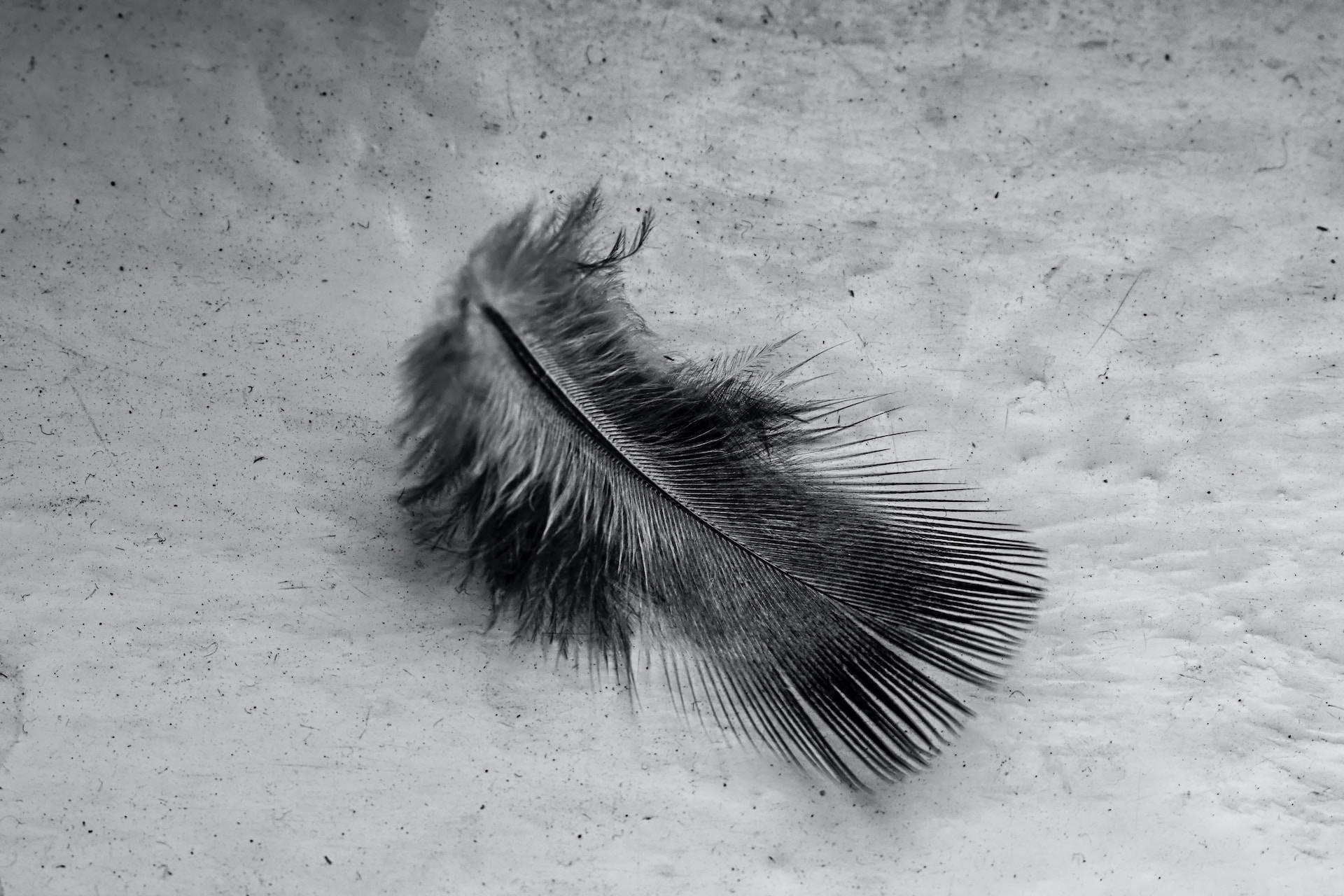
A tiny black feather, soaked with saliva and bile, lay in the middle of Rufus’s desk.
Rufus’s face turned dark. His cheeks bulged. He sputtered and hacked, his little arms folded around his middle as though trying to keep himself from tearing in two.
“He’s choking!” someone cried.
Miss Sheppard, realizing what was happening, sprang down the aisle to assist him, but he beat at her with his little fists when she tried to grab him around the waist and administer abdominal thrusts. Still leaning over his desk, his shoulders heaved as he gave one last mighty retch.
Something slid from Rufus’s throat and fell onto the desk with a wet splat. It was small and dark, curled in on itself like a fetus. Its limbs splayed away from its body, its feet kicking feebly. Its mouth gaped open, framed with jagged yellow. Its eyes were enormous, but closed and bruised-looking, soft as swelling blisters. It stretched out its skinny neck as far as it would go, searching. From its throat came a single gasping chirp, a protest and a plea.
Rufus looked down at the baby bird, his eyes seeing something that none of us could. Tenderly he laid his hand over the creature, as though to protect it from our staring eyes. Lovingly he brought his full weight down upon it until it crunched.
.
.
Elliott Gish is a writer and librarian from Halifax, Nova Scotia. Her fiction has appeared in The Baltimore Review, The New Quarterly, Grain Magazine, and many others.
 atlasandalice.com
Leave a comment