Fiction from Pia Quintano
Monster Men from Outer Space
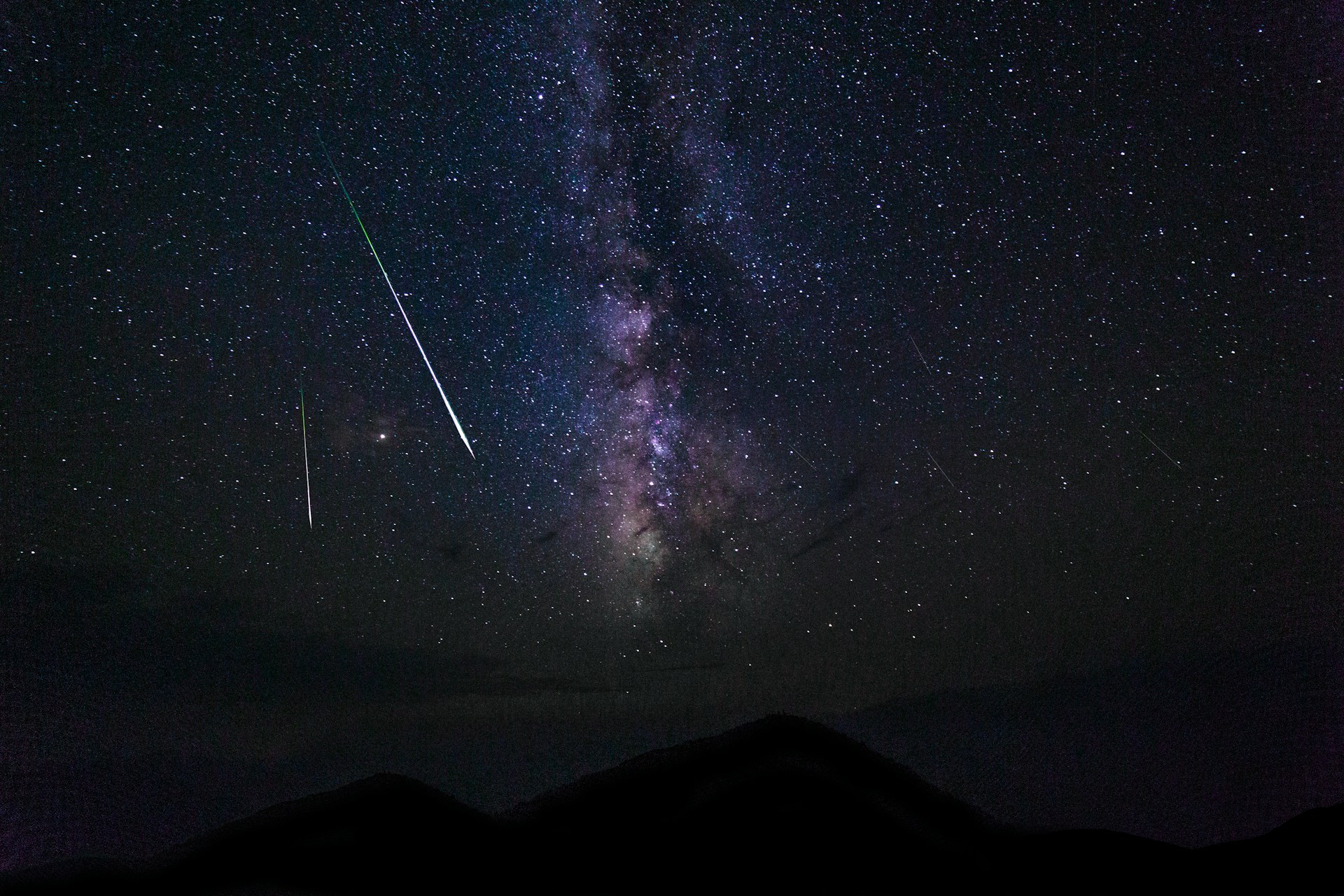
The monster men came from outer space, their sideburns fizzing as they burned through the atmosphere, space dust beading up on their brows. They landed right in the crotch of the country and traveled inward through all the women who stood like trees with parted roots on its shores. Scraping through the canyons, bleeding up through the valleys, these monster men studded the country. They pushed from California to Texas through the Dakotas and into the Oswego of memory and came in New York, to the rhythm of the street dancers and togas of the melted drums of summer, their dicks aimed like a cannon, their hips like the great white flanks of a mare pushing out a foal in Times Square.
The monster men roved in packs but stung as individuals inside of copper bars. I first met these men inside the big top, crushing the backs of the plumed horses, selling tonics by the orangeade machines and perspiring into their white tank shirts, their eyes and lips like sharks on the nature channel. I thought they were the men of New York, Kansas and California before I found out they were monster men, hoed down by science, conceived in the wombs of the black holes. Growing big and strong they entered the atmosphere like space probes, splashing into the sea and through tunnels under the continents. They removed the oblique men, the ones who had diminished like shadows against the buildings, who seeped back under the doors and into my mother’s flower box. The universe spit out a giant fiery orb of testosterone and their milder brothers retreated from their sex like turtles, while the monster men took their place, in New York, LA, Boston, roving the streets like rubber men, widowing us from our egos.
The women retreated from the cities to the shorelines hiding behind the shoulders of the granite rocks. But still they came, leaving a rind on the ocean that washed up on the shore and eroded the shells. At night they took their conquests out of graves, still holding plastic flowers in their fists. These were the voices of the dead, the corpses of their triathlons.
When the men started traveling the routes between bars and dance halls, staring at the spindly ankles of the near dead, no one saw the danger in them, their bristling cheeks, hairy wrists, but in a corner of Texas trouble was brewing. They had made a landing, barreling into the stratosphere, cloning themselves into ten-gallon studs and the reverberations were felt thousands of miles away.
I spit-waxed my shoes, knotted the laces so tightly across my instep that a vein jumped out and made an angry root across the top of my foot. I was strapped in and ready to launch myself at yet another pair of belted trousers and a cotton blend shirt and I headed downtown to the Village which was alive with possibilities. I felt it in the air, a particular bite as I crossed 23rd Street, triangular winds angling off the Flatiron Building, flagging through my skirt and lifting away the paper men who littered the landscape.
The cries of these monster men filter into carnival towns, dispersing the mist floating into the mountains. They come in teams, their arms vast girders—they are selling tonics, muscle strengtheners and the crowd is forming around them leaving the sword-swallowers and the rubber band men to fend for themselves. With one arm they pick up a woman who spent the morning in a five-and-dime, washing her hair in the sweat of Seattle. They leave her to bleed brooks under the moon, until they move off, like ghosts across the land, the mushroom clouds of organism rising from K-Marts and KFC.
I watched him, on the edge of my bed, the smell of smoke rising from him like a cloud. He had come in a great wave of nausea that shook the bed and loosened the shingles in my brain.
I met him in the hollow of a bar on 16th Street, listening to the rhythm and blues vibrating out of the jukebox. His eyes had the narrowed gaze of the hunter, and I was dressed like prey, marveling all the time how easy it was to corset my personality in stockings and a spandex skirt. He took one look at me and beckoned.
I noticed immediately his cowboy boots but ignored the evidence. He was diagramming his life for me through the stained glass of his drink, and I was following parables that leaked through my legs.
He rotated my seat in his direction. He was handsome, handsomer than the others, who rested their elbows against the bar. I listened to the words he garbled into his ice cubes, the acute accent his cowlick made above his forehead. I might not have recognized him had we only passed as civilians on the street, but in the bar, he was as powerful as a donor.
Monster Oakies, whose soul have you seen in the shape of a calf or the upward tilt of a thigh? You have screamed through my aura. I am left only with the flesh your eyes have cast me in, the summer that pastes my blouse against my heart—the heat rising. Stop filling the streets with your lower registers, shooting the deer and ducks and beating your dogs. Swallow the long, steel-dipped swords, suck in the hairy s’mores and breathe the light of day in a new town—your pin-curled maidens and stone chests—the juggler’s jeweled hats on your heads—the rings on your fingers—as you somersault on the elephants and then reappear at the height of a village cafe—blowing your wad at some invented transgression, the sweat soaking through your chinos. Breathe in the perfume of the conquered, who would have thrown stones at you in younger days—for your audience is old, having already been invaded by their father’s splintering attic souls.
I wondered how he would shift us off the stool, change us from vertical to horizontal, but the first thing he did was take my hand. He had a purple ring around his pinkie and his nails were small and sharp.
“What’s your sign?”
This should have given me the clue to his origin.
“Vacant,” I said.
He leaned over and kissed my cheek, his face so young it could have been birthing itself. There was a system of thought attached to the way he rolled up his cuffs. His wrists were bare and innocent, they might have emerged from a school blazer. He took my hair and pulled me closer, kissing me, but my mind was hanging back, thinking of the picture we made, two strangers, leaning into each other, attached by the seat of their pants to barstools. He pulled me off and dragged me to the jukebox, his hands on my shoulders attempting to shake me into a dance and I remembered the last man, all stubble and undershirt in the mornings, yelling like Jackie Gleason into the empty space of Third Avenue—screaming for Sweet n’ Low, and he was here again, only flatter, with his hands on the small of my back crushing out the memories of the others.
Montana-disguised men. They entered ships and taxi cabs—drifting off their milky ways—walking on stilts outside my window, leaping up on pogo sticks, finding me where I sat at fountains and buses and libraries.
I travel the streets of New York holding my coat against my body, bowing my head to the wind, and feel them looking. My hand against my coat is cold and bitter. The Starbucks, Petco’s, Gaps making isosceles triangles on every corner of the city. I am in a capsule far above, worrying about God reaching out a hairy paw to me. And I drop back down, land in a library and see them, their palms sweating into the leaves of a book, and they follow me as I search for a neutral place, a city devoid of glances.
He offered to walk me home through the pitch streets, the alcohol gurgling in our stomachs. The pavement inside my soul couldn’t bear his weight, and I should have seen the gust of space dust that trailed behind him, that later came bursting from his seams as he rolled over me.
He followed me up the steps to my apartment in a brownstone that had seen too many invasions, so close that he could have swallowed my back, and he was on me before I had even closed the door behind us, tasting each other’s beer, leaving stubble rashes around my lips, tugging my hair so hard it came off in his hand. I stopped him and placed him on a chair and immediately noticed the way his form filled the space and created a gravitational pull so that all the memories of the other men shrunk around him.
“Can I bring you something to drink?”
But he ignored the question and I wondered whether he was afraid my glasses carried some alien bacteria on them. I felt his breath on my scalp, and I remembered myself on the edge of adulthood in college in the Pacific Northwest looking at the men with their great craggy tanned faces as if they were movable Rushmore’s. I wondered where to fit the images that had formed me in the Northeast, the Al Pacinos and Robert De Niros of my childhood. Yet still they circulated near me like buzzards, as if our two species could blend.
He circled round, levitated himself on my bed and I felt the brittle hair between his shoulder blades and the muscles in his arms dropping a web around his emptiness and catching me in it. His hair fell against my cheek, as black as a Baldwin’s and his pointy nose bruised my neck. I pinched the shoulders of fat around his torso—he shifted himself, gave me a more flattering angle, the hollow under his rib cage. There came up from his thighs a smell of heat and urine—a call to battle, wrestling the bed into submission, lassoing the souls that pitched away from us up toward the ceiling. I was the soil he was tilling through a latex sack, leaving me nothing but pimples on my tongue and a new trail of hope.
I realized that he was a man who stood with many shadows behind him that dated back to the beginnings of civilization, which had nothing to do with the man who had presented himself to me at the bar with his chest hair buttoned inside his white cotton shirt. He seemed carved from some unknown energy from outer space, whose touch was wedded to mythology and in whose eyes a mad joy gleamed. He was the last in a great line of fossils who had landed on my bed. Great exhalations of breath that traveled from the dawn of time like cascading winds across the turf that had formed the monsters of Stonehenge and Easter Island. I felt it in the great washes of his tongue against my neck, his cheekbones leaving indentations in my cheek far deeper than the engravings of the sheets and the wrinkled dampness of the pillowcases. We had finally left the shore on which we’d stood on separate rocks and were cast out in the mouth of the Pacific, heading up and down the crests of monster waves, he and I sharing some secretive rite of gods, the strength that blasted holes into cyberspace and all but destroyed my digital clock. He screamed that he loved me but then he came, shot off the bed and landed on the floor, deflating like an exhausted soufflé.
Thoughts of the monster men spread up the chimneys of Jersey and out into the highlands of Coney Island—where the D-train rattles through a drainpipe and comes up through the boardwalk to brain me, while I dream of them, suffocating in my cotton candy, looking for salvation in its pink clouds that they mistake for pubic hair. But I will send them on their way, through the desert of the states, into the heart of the country.
He left in the pre-dawn, leaving the lid up on the toilet and ashes on the tiles and the rooms contained his alien scent, of rhubarbs and Mennen. I wondered what he’d spawn in me, what mutant life would be left in the wake of his departure, what punishment I would levy against myself for letting him land. He borrowed my razor, and I gave him the only toothbrush I had in reserve, knowing that it would soon join the graveyard on the top shelf of the medicine cabinet. He took great care in washing himself and was fully dressed by the time he stepped out of the bathroom, looking strange and steel-edged in the muted tones of my room. His face turned cold as I walked him to the corner, a face I couldn’t picture over a cereal bowl or unrolling a croissant. He walked far from my side, as if we were random passersby and I touched his sleeve, then his face, my mind screaming for something. But he was already on his way out, to perform tricks on ponies on those long rides into the horizon of the afternoon, speeding him past Nedicks and Woolworths and into the morning of Gray’s Papaya, chili dogs beating down my scent on his tongue.
Don’t go! I thought. Don’t leave me to the countryside of girlfriends and Starbuck laptop specials. But he had already broken away. I retracted my toes from my shoes, reached, with my nails curling downward into the earth, to pull up my ego like a weed.
I have followed these men and know them for what they are: surface dwellers. They watch us out of bars and beaches and cars and swivel chairs. They work the lost streets of the city, as if trying to find a tooth they buried in a baguette on 14th Street, when they stood in 4-point hats and their profiles made deep marks against the blank walls of their mother’s houses. Still, they are allowed to penetrate, to work their mime show and excavations until they disappear up through the shafts and into three-piece suits.
I looked at the bed and the sheets that lent a gentle stench to the morning, the light breaking through their rumples, and I had never seen a colder place. The kitchen empty of action, I sat at the table and waited for the moon, Gatorade serving a hangover I didn’t have.
I saw the hurt spreading toward me like a heat wave, wrinkling the appliances across the room and I was alone in its drift. I felt mirages falling away from me, all the edifices of hope I had built over the years, only to be lost to the last retreating predator stumbling over the ghost of the morning. And I felt the ghost of it in myself, the drop, the emptiness in my chest and the scream forming in me like a cyclone, a scream to hell, echoing through the cornfields and across the deserts, and up through the canyons—a cry of hate following him down the streets and plains of his manhood.
I called after him, but the name I shouted wasn’t his, it was his t-shirted brother grumbling with his arm on the refrigerator, perspiring down his temples because I had forgotten the ketchup, or my father yelling at my mother for another dose of Digitalis. The morning muted them, blending them together in my mind like the mixed juices in a Tropicana.
This is what I have seen through my window and lived through the action of the bars, the observer inside myself who turns them down one after another, remembering the graves lying out like mud packs in the fields of my twenties. It was a great funeral pyre—all those charred philosophies laid out like corpses. I see it all, my thirties locked in their road maps, the landings and sightings that no one catalogues.
And still we’ll speak to them, for they carry a history, like conquered fascists, they have the swagger of the ages, of battles pitched and lost, the epic poems of their iron men age, the memories of the power in their hands and the furniture of the stone mountains of the Dakotas, their guilt a monument to the civilization they have scarred and then deserted into brittle twigs.
We will bury them without a glance to the sky, to the place where they soared into our atmospheres like winged Frankensteins. We will remember them with a dull ache in our thighs, the contraction of space that had once spewed delinquents. They will sink like stone casts to the bottom of the cemeteries, burrow through to the core of the earth, and do their jig among the crippled moths.
.
.
Pia Quintano is a New York based writer/painter who often experiments with form in her fiction. Her short stories have appeared in Havik, Lunch Ticket, The Willesden Herald story of the month and will soon appear in Landlocked and Marathan Literary Review.
 atlasandalice.com
Leave a comment